


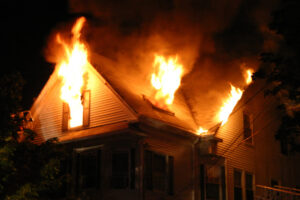
Most people associate arson with deliberate, malicious acts — someone intentionally setting fire to a building or property with clear criminal intent. But in California, the line between an accident and a criminal charge can be thinner than many people expect. If a fire occurred on or near your property in Santa Ana and investigators have determined it was not accidental, you could find yourself facing arson charges even if you had no intention of starting or spreading a fire. Understanding how California defines arson, how investigators build these cases, and what defenses are available is essential for anyone caught in this situation.
How California Law Defines Arson
Under California Penal Code 451, a person commits arson when they willfully and maliciously set fire to or burn any structure, forest land, or property. The key word here is willfully — meaning the act must be intentional. A fire that starts and spreads due to negligence, carelessness, or pure accident does not meet the legal definition of arson under this statute.
However, California also recognizes a separate offense under Penal Code 452: unlawfully causing a fire. This charge applies when a person recklessly causes a structure, forest land, or property to burn. Recklessness is a lower bar than willfulness — it means the person was aware of and consciously disregarded a substantial risk that their conduct would cause a fire. So even without proof of deliberate intent, a prosecutor may still pursue criminal charges based on reckless behavior.
How Arson Investigations Work
Arson cases are built on highly technical evidence, which is part of what makes them so challenging to defend — and so vulnerable to error. Fire investigators examine burn patterns, point of origin, accelerant traces, and structural damage to form conclusions about how a fire started and whether it was intentionally set. These conclusions are often presented as scientific fact, but they are frequently the product of interpretation and judgment rather than certainty.
Investigators may conclude that a fire was intentionally set based on factors such as:
- Multiple points of origin
- The presence of accelerants like gasoline or lighter fluid
- The absence of an obvious accidental cause
- Financial motive, such as an insurance policy on the property
- Prior incidents or threats
Each of these factors can be challenged. Accelerant traces, for example, can sometimes be explained by legitimate materials present in the structure. Burn patterns that appear suspicious to one investigator may be interpreted differently by another. The investigation process itself is subject to human error and bias.
Why Expert Testimony Matters So Much
Because arson prosecutions depend so heavily on technical evidence, the quality of expert testimony on both sides often determines the outcome. A defense attorney with experience in arson cases will know how to identify weaknesses in the prosecution's expert analysis, retain qualified defense experts to offer alternative interpretations, and effectively cross-examine the investigators who conducted the inquiry.
Law Office of Michael L. Fell has a unique advantage in this area. Before entering private practice, the attorney at Law Office of Michael L. Fell actually taught classes for arson investigators while working with the DA's office. That inside knowledge of how arson investigations are conducted — and where they can go wrong — is an invaluable asset when building a defense.
What to Do If You're Under Investigation
If investigators have contacted you or indicated that you are a suspect in an arson investigation, do not speak to them without legal representation. Anything you say can be used against you, and arson investigations move quickly once a target is identified.
Law Office of Michael L. Fell represents clients facing arson charges throughout Orange County, including Santa Ana. Call (949) 585-9055 today to protect your rights and begin building your defense.