


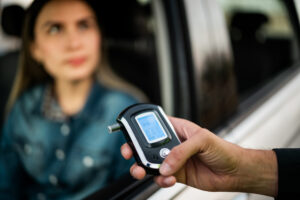
If you're pulled over on suspicion of DUI in Dana Point, an officer may ask you to blow into a breathalyzer. In that tense moment, many drivers wonder whether they can simply refuse. The answer is more complicated than a straightforward yes or no, because California law treats different breath tests differently, and refusing the wrong one can carry consequences that outlast the traffic stop itself. Here's what you need to understand.
Two Very Different Breath Tests
Not all breath tests are the same under California law, and the distinction matters enormously.
The first is the preliminary alcohol screening (PAS) test, a handheld device an officer may offer at the roadside before an arrest. For most adult drivers who are not on DUI probation, this test is voluntary. You are generally allowed to decline it without triggering the automatic penalties that come with refusing a chemical test after arrest. Officers don't always make this distinction clear, which leads many drivers to submit to a test they weren't legally required to take.
The second is the chemical test administered after a lawful DUI arrest. This is where California's implied consent law comes into play, and refusing this test carries serious, automatic consequences.
California's Implied Consent Law
When you obtained your California driver's license, you agreed—as a condition of driving on the state's roads—to submit to chemical testing if you're lawfully arrested for DUI. This is known as implied consent. Once you've been arrested, refusing the required chemical test is not a consequence-free choice.
What Happens If You Refuse After Arrest
Refusing a chemical test after a DUI arrest in Dana Point triggers penalties that are separate from, and in addition to, any penalties for the DUI itself. For a first refusal, the DMV can impose a one-year license suspension. This suspension applies even if you're never convicted of the underlying DUI, and unlike a standard DUI suspension, a refusal suspension typically does not allow for a restricted license to drive to work.
The consequences escalate with prior offenses. A second refusal within 10 years can result in a two-year revocation, and a third can lead to a three-year revocation. On top of the license consequences, a refusal can be used against you in court as evidence suggesting consciousness of guilt, and it can add a mandatory jail term if you're ultimately convicted of the DUI.
Should You Ever Refuse?
There's no one-size-fits-all answer, and the decision at the roadside is rarely easy. Refusing the post-arrest chemical test guarantees certain administrative penalties, but submitting to it provides the prosecution with evidence that can be used to convict you. Every situation is different, which is why what happens after your arrest is so important.
Challenging a Refusal Allegation
Even if you've been accused of refusing a chemical test, the matter is not necessarily settled. An experienced attorney can examine whether the arrest was lawful in the first place, whether the officer properly advised you of the consequences of refusal as the law requires, and whether your conduct actually constituted a legal refusal. Officers sometimes fail to give the required warnings or misinterpret confusion or a medical condition as a refusal. These issues can become the foundation of a strong defense at both the DMV hearing and in criminal court.
Get Experienced Help in Dana Point
Whether you submitted to a test or refused one, a DUI arrest in Dana Point demands a serious defense. As a California Board Certified Criminal Law Specialist, Attorney Michael L. Fell understands the nuances of implied consent and knows how to protect your license and your rights. Contact Law Office of Michael L. Fell today at (949) 585-9055 to discuss your case.